
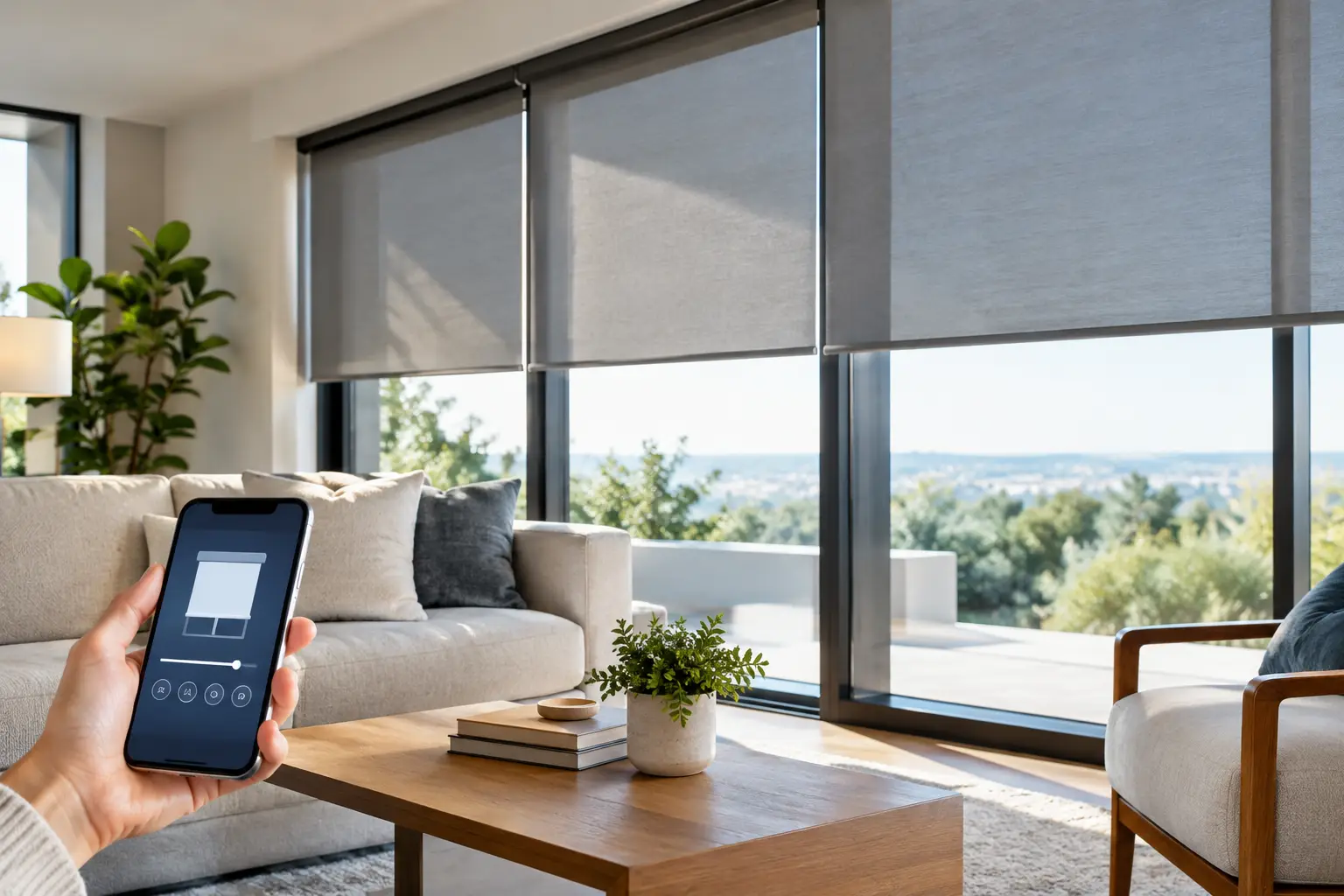
7 Smart Home Shading Trends for Better Living
A west-facing living room can go from inviting to uncomfortably bright in less than an hour. Smart home shading trends are responding to that everyday reality with custom window treatments that do more than move up and down on command. The strongest systems now combine precise light control, quieter operation, thoughtful fabric selection, and automation that fits how a household actually lives.
For homeowners, designers, and builders, the opportunity is not simply to add motorization. It is to specify shades, blinds, drapery, or exterior screens that support the architecture, protect interiors, and make a home more comfortable without adding another complicated device to manage.
Smart Home Shading Trends Shaping New Projects
1. Automation is becoming room-specific
Whole-home control remains appealing, but the best smart shading plans are increasingly designed room by room. A bedroom needs reliable blackout capability and a gentle morning opening schedule. A media room may need full glare control during the day. In a kitchen or great room, homeowners often want filtered daylight without losing the view.
This is why custom roller shades, cellular shades, Roman shades, and drapery systems are being paired with different control strategies throughout one home. A single remote or app can still manage the system, but each window treatment is selected for its own purpose. The result feels more considered than installing the same shade on every opening.
2. Schedules are replacing constant manual adjustments
Motorization is most useful when it removes repetitive tasks. Timed schedules can raise shades in the morning, lower them during strong afternoon sun, and close bedroom treatments at night. Some systems can also work with scenes, so a “goodnight” command closes shades, lowers lights, and supports privacy across the home.
The trade-off is that automation needs to reflect real routines. A schedule that closes every living-room shade at 4 p.m. may be helpful in summer but frustrating in winter when a homeowner wants more natural light. Flexible programming, easy manual overrides, and professional setup matter more than a long list of app features.
3. Battery-powered motors are expanding retrofit options
Hardwired motorization remains a strong choice for new construction and major renovations, particularly where many shades will be installed. It offers a clean, permanent approach and avoids planning around battery changes. However, battery-powered systems have become a major trend because they make motorized shades possible in finished homes, condos, and individual-room upgrades.
Rechargeable battery wands and concealed battery solutions reduce visual clutter and can make installation less invasive. Battery life varies based on shade size, fabric weight, frequency of use, and solar exposure, so it should be discussed during specification rather than assumed. Large or frequently operated treatments may still be better served by hardwired power.
4. Energy performance is influencing fabric and shade choices
Smart shading is increasingly part of a home’s comfort and energy strategy. Honeycomb shades can help reduce heat transfer at the window, while solar screen fabrics can soften glare and reduce solar gain without fully blocking an outdoor view. Exterior shades, awnings, pergola systems, and facade shading can stop heat before it reaches the glass, which is particularly valuable on expansive south- and west-facing elevations.
Automation adds another layer of performance. Closing the right treatment before afternoon sun reaches a room can reduce strain on cooling systems. During colder months, opening shades to capture daylight may be beneficial, while insulating treatments can help at night. Actual results depend on window orientation, glazing, climate, and the selected product, so there is no one fabric or automation setting that suits every property.
5. Design is moving toward softer layers
The early image of smart shades was often a minimal roller shade disappearing into a ceiling pocket. That look remains popular, especially in contemporary homes, but design-conscious projects are bringing back layered window treatments. A motorized roller shade or honeycomb shade can handle privacy and glare, while stationary or motorized drapery panels introduce softness, color, pattern, and acoustic warmth.
This layered approach works especially well in bedrooms, formal living areas, and open-concept spaces with hard finishes. It also allows designers to separate function from decoration. The shade may be selected for opacity and heat control, while the drapery fabric is chosen for its texture, scale, and relationship to upholstery or wall color.
6. Concealed hardware and cleaner sightlines are in demand
Recessed pockets, fascia systems, and carefully planned mounting details are becoming more common in custom homes and renovations. When the roller tube, track, or wiring is concealed, the treatment looks intentional even when raised. This is especially effective with tall windows, sliding doors, and wide expanses of glass.
The detail needs to be planned early. Pocket dimensions, stack-back space for drapery, window and door clearance, and access for future service all affect the final result. For renovations where a recessed pocket is not practical, decorative fascias, cassette valances, and well-matched hardware can still create a polished finish.
7. Integration matters, but reliability matters more
Leading systems from Lutron, Somfy, Hunter Douglas, Graber, Alta, and other established manufacturers offer different control ecosystems, motor options, fabrics, and installation requirements. The right choice depends on whether the project needs standalone shade control, integration with a broader smart-home platform, or a professionally programmed lighting and shading system.
Voice control can be convenient when hands are full, and app control is useful away from home. Yet the most satisfying systems remain simple to operate at the wall, with a remote, or through an intuitive scene controller. A beautiful automated shade becomes less useful if guests cannot close it, a child cannot operate it safely, or the homeowner needs to reach for a phone every time the sun shifts.
How to Choose a Smart Shading System That Fits
Start with the window, not the technology. Measure the opening accurately and identify what the treatment must accomplish: privacy, blackout, glare reduction, UV protection, insulation, view preservation, or a decorative finish. Large windows, angled glass, doors, and multi-story spaces may require specialized products, stronger motors, or a different mounting approach.
Next, consider the power source before finalizing finishes. This is particularly important in new construction, where wiring can be coordinated before drywall is complete. For retrofit projects, rechargeable battery motorization may be the practical answer. If the shade will be paired with drapery, coordinate both systems so the treatments do not interfere with one another.
Fabric selection deserves the same attention as the motor. Openness factor affects visibility and glare control in solar shades. Lining changes how Roman shades and drapery filter light. Cellular construction affects insulation, while roller shade fabrics range from near-transparent solar screens to room-darkening materials. Samples should be viewed at the window in daytime and evening conditions, not only under showroom lighting.
For Toronto-area homes and condos, window orientation, high-rise sightlines, and local privacy conditions often shape the recommendation. A consultation can help determine whether interior shades alone are sufficient or whether exterior shading, automated drapery, or a layered solution will deliver better results.
Smart shading should feel like a natural part of the home, not a feature that demands attention. Bring window dimensions, photos, floor plans, and a clear picture of how each room is used to a design consultation. With the right custom treatment and control plan, everyday light becomes something you can shape with confidence.