
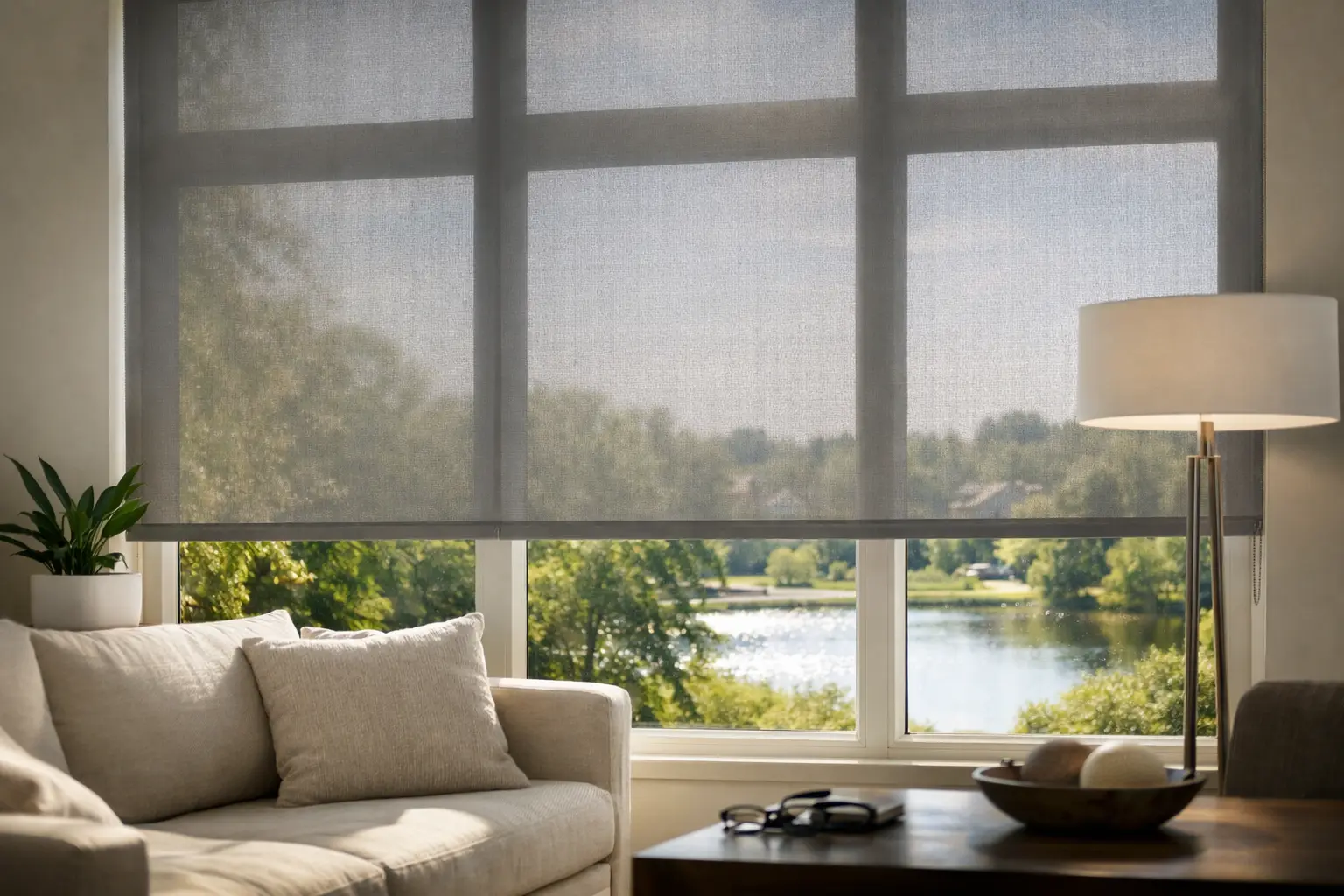
What Are Solar Shades for Windows?
That afternoon glare that turns a beautiful room into a squinting contest is usually what brings people to ask, what are solar shades, and are they actually different from standard roller shades? The short answer is yes. Solar shades are a specialized window shade made with performance fabrics designed to filter sunlight, reduce glare, and help protect interiors from UV exposure while still maintaining an outside view.
For homeowners, condo owners, and design professionals, that balance is the real appeal. You get a cleaner, more architectural look than many traditional window coverings, but the benefit is not just visual. Solar shades are built to manage light in a more technical way, which makes them especially useful in rooms with large windows, strong afternoon sun, media spaces, and modern open-concept layouts.
What are solar shades and how do they work?
Solar shades are typically a type of roller shade made from woven synthetic fabrics rather than decorative cloth. Those fabrics are engineered to screen sunlight instead of fully blocking it. When lowered, the shade filters incoming light, cuts harsh brightness, and reduces UV penetration, but does not necessarily darken the room the way a blackout shade would.
The key detail is the fabric openness factor. This refers to how tightly or loosely the fabric is woven. A lower openness factor, such as 1 percent or 3 percent, blocks more light and provides more privacy, but it also reduces visibility to the outside. A higher openness factor, such as 5 percent or 10 percent, preserves more of the view and brings in more natural light, though it offers less daytime privacy and slightly less glare control.
That is why solar shades are not a one-size-fits-all product. The same room can feel very different depending on the fabric selected, the direction the windows face, and how the space is used throughout the day.
Why people choose solar shades
Most buyers are not shopping for solar shades because they want a dramatic fabric statement. They choose them because they have a specific problem to solve. Usually it is glare on screens, fading on floors or furniture, excessive heat gain, or a room that feels too exposed without wanting to lose the view.
In a living room with expansive glass, solar shades can soften direct sun without making the space feel closed off. In a condo, they can help maintain a clean exterior-facing look while still supporting privacy and daytime comfort. In a home office, they often make the difference between usable daylight and constant screen reflections.
Design-wise, they also fit very naturally into contemporary interiors. Their profile is streamlined, the fabrics tend to be neutral and textural rather than ornate, and they pair well with drapery panels when a softer layered look is needed.
The biggest benefits of solar shades
Glare reduction is usually the first and most noticeable benefit. If sunlight is hitting your television, laptop, or polished floor, solar shades can diffuse that light enough to make the room more comfortable without forcing you to shut out the day completely.
UV protection is another major advantage. While no interior shade can eliminate all solar damage, the right solar shade fabric can significantly reduce ultraviolet exposure on furniture, rugs, flooring, and artwork. That matters in rooms with strong sun patterns and expensive finishes.
They can also support energy performance. Solar shades are not the same as insulated cellular shades, so they are not usually the top choice when maximum thermal insulation is the priority. But they can help reduce solar heat gain, particularly on large south- or west-facing windows, which may ease the load on cooling systems and improve comfort near the glass.
Aesthetically, they keep a room looking crisp and uncluttered. For many designers and homeowners, that visual simplicity is part of the value.
Where solar shades work best
Solar shades are especially effective in rooms where view preservation matters. Family rooms, kitchens with backyard exposure, great rooms, and offices are all common placements. They are also strong candidates for condos with floor-to-ceiling windows, where bulky treatments can feel visually heavy.
They are often used in dining areas and sunrooms as well, especially when the goal is to manage brightness rather than create full privacy. In media rooms, they can work if moderate light filtering is enough, but if true room darkening is needed, a blackout solution is usually the better fit.
Bedrooms can go either way. Some clients like solar shades in bedrooms for daytime softness and add drapery for nighttime privacy. Others prefer dual-shade or layered systems because solar shades alone generally do not provide the darkness most sleepers want.
Bathrooms are more situational. If the window faces a private area and the main concern is filtered light, a solar shade may work. If close neighboring views are an issue, privacy-focused shades are often a better answer.
Solar shades vs. roller shades
This is where some confusion comes in. Solar shades are part of the roller shade family, but not every roller shade is a solar shade. Standard roller shades can be made in decorative, light-filtering, room-darkening, or blackout fabrics. Solar shades use screen-like technical materials meant specifically for managing sun, glare, and UV while maintaining outward visibility.
If your priority is softness, pattern, or blackout performance, a regular roller shade fabric may make more sense. If your priority is preserving the view while improving daytime comfort, solar shades usually stand out.
That distinction matters during specification. Two shades may look similar in shape and operation, but perform very differently once installed.
What to know about privacy
One of the most common misunderstandings is assuming solar shades provide full privacy because they reduce visibility from inside. During the day, they often offer good outward view and some level of daytime privacy, depending on lighting conditions and openness factor. At night, when lights are on indoors, that changes.
If nighttime privacy is essential, solar shades alone may not be enough. That is where layered designs become practical. Pairing solar shades with drapery, side panels, blackout rollers, or dual systems can give a room both daytime performance and evening privacy.
This is one of those categories where expectations need to be set clearly. A product can be excellent and still not be the right standalone answer for every window.
Choosing the right openness and color
When selecting solar shade fabric, openness factor and color are the two decisions that most affect performance. Lower openness generally means more glare control and more privacy, but less view. Higher openness means the opposite.
Color also changes the experience. Darker fabrics tend to preserve the outside view better because they reduce reflection and improve visual clarity through the material. Lighter fabrics can feel brighter and softer in the room, but may reflect more light inward and slightly reduce the crispness of the view.
There is no universal best option. A west-facing media room may benefit from a tighter, darker screen fabric. A bright kitchen where the goal is to soften light while keeping an airy feel may do better with a lighter tone and moderate openness.
Motorization makes a difference
Solar shades are particularly well suited to motorization because they are often installed on large windows and used throughout the day. Adjusting them manually across multiple openings can get old quickly, especially in rooms with high glass walls or hard-to-reach windows.
Motorized solar shades make it easier to fine-tune comfort as the sun moves. They also support a more polished look since shades can be aligned uniformly and controlled with remotes, wall switches, or smart-home systems. For builders, renovators, and homeowners planning larger projects, this can be a worthwhile upgrade rather than a luxury add-on.
Are solar shades right for your space?
If you love natural light but hate glare, solar shades are often one of the smartest solutions available. They are especially strong in rooms where preserving the view matters and where modern, clean-lined window treatments fit the design direction.
They may not be the best answer if your top priority is total privacy, maximum insulation, or blackout darkness. In those cases, another shade style or a layered treatment may perform better. The right choice depends on how the room is used, how much direct sun it gets, and whether the goal is comfort, privacy, aesthetics, or some combination of all three.
That is why product selection matters more than the category name alone. A well-chosen solar shade can make a bright room feel calm, functional, and refined. The wrong fabric can leave you wishing you had more privacy or less light. If you are comparing options for a home, condo, or client project, it is worth treating solar shades as a performance product, not just a style choice.