
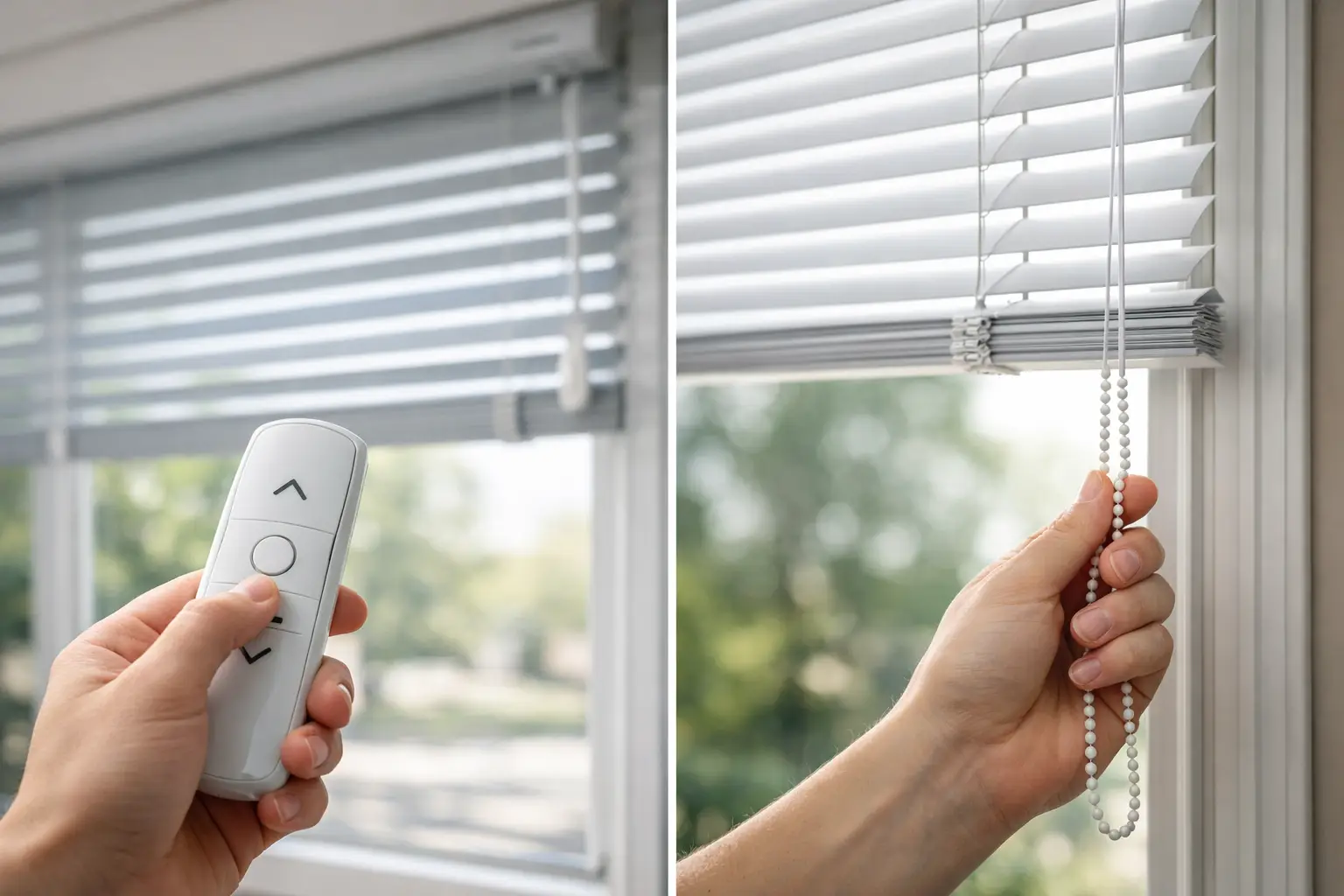
Motorized Blinds vs Manual Blinds
The difference between motorized blinds vs manual blinds usually becomes obvious at the exact wrong moment – when a tall window is hard to reach, afternoon glare is hitting the room, or one shade in a row is sitting slightly crooked. On paper, both options cover a window. In real spaces, they create very different daily experiences.
For some rooms, manual blinds are still the right answer. They are simple, familiar, and often cost less upfront. But for larger homes, layered interiors, smart-home setups, and windows that are used constantly, motorization can change how a room functions as much as how it looks. The better choice depends less on trends and more on window location, lifestyle, control needs, and the level of finish you want across the space.
Motorized blinds vs manual blinds: what really changes?
The biggest difference is not just whether you press a button or pull a cord. It is how the treatment performs over time.
Manual blinds rely on direct operation, whether that means a wand, cord, chain, or lift mechanism. They are straightforward and often a practical fit for standard windows in rooms where adjustments are occasional. If you open and close the blinds once a day and the window is easy to reach, manual operation may feel perfectly adequate.
Motorized blinds use a powered system to raise, lower, or tilt the treatment through a remote, wall switch, app, or smart-home platform. That shift in operation affects convenience, child safety, design cleanliness, and the ability to manage multiple windows consistently. In homes with wide expanses of glass, high ceilings, or layered shading plans, that difference becomes significant very quickly.
Convenience is the biggest reason people upgrade
When clients compare the two, convenience is often what starts the conversation. It is also what tends to justify the investment once the blinds are installed.
In a living room with several windows, manual blinds can be manageable in theory but tedious in practice. You may need to walk across the room, adjust one shade at a time, and try to align them evenly. In a bedroom, it may mean getting out of bed to block early light. In a stairwell or entry with high windows, manual operation may not even be realistic.
Motorization solves those friction points. You can move a single treatment, a group of treatments, or an entire room at once. Scheduled operation also adds a layer of control that manual blinds simply do not offer. Shades can lower during peak sun hours, open in the morning, or close for privacy at night without anyone having to think about it.
That said, convenience matters differently from room to room. A rarely used guest room may not benefit much from automation. A primary bedroom, media room, or sun-exposed family room usually does.
Cost matters, but so does value over time
Manual blinds generally have the lower entry price. If budget is the main driver and the windows are standard in size and easy to access, manual operation can be a smart, efficient choice. It allows you to direct more of the budget toward fabric, material quality, or adding treatments in more rooms.
Motorized blinds cost more because the system includes motors, controls, power solutions, and in some cases home integration. Customization level also affects pricing. Battery-powered shades, hardwired systems, premium fabric collections, and advanced control platforms all change the final number.
The better question is whether the added cost creates enough value for the way the room is used. In many homes, the answer is yes for key spaces and no for others. It is common to prioritize motorization in a main living area, primary suite, or hard-to-reach windows while using manual blinds in secondary rooms. That mixed approach often delivers the best balance of function and budget.
Design impact is often overlooked
People usually think of operation first, but the visual effect matters just as much. Manual blinds may include visible cords, chains, or tilt controls depending on the product type. Even when those details are minimal, they still contribute to the overall look.
Motorized blinds tend to create a cleaner presentation. With fewer visible operating components, the window treatment reads as more tailored and architectural. That can make a real difference in contemporary interiors, large-window applications, and rooms where symmetry matters.
This is especially true when multiple shades are installed side by side. Motorization helps keep movement more consistent, which supports a polished finish. In design-driven spaces, that uniformity is not a small detail. It is part of what makes the room feel complete.
Motorized blinds vs manual blinds for safety
Safety is one of the clearest advantages of motorization, especially in homes with children or pets. Traditional operating cords have long been a concern, and while many manual products now use safer cordless or wand-controlled designs, motorization remains one of the cleanest ways to remove accessible operating hazards.
For family homes, nurseries, and bedrooms, that peace of mind carries real weight. It also supports a simpler window presentation without extra hardware or control components hanging into the room.
Manual blinds can still be safe when specified correctly, but the product selection matters. This is one reason custom guidance is so valuable. The right operating system should fit not just the style of the treatment, but also who lives in the home and how the room is used.
Smart-home integration is not just a luxury feature
For some buyers, app control sounds optional until they start thinking about daily routines. Smart integration is useful because it connects window treatments to how the home actually functions.
Motorized blinds can be programmed around light, privacy, heat gain, and occupancy patterns. That can help reduce glare in a home office, protect furniture and flooring from harsh sun, and support better temperature management in heavily exposed rooms. Integration with voice assistants or whole-home systems can also simplify control when there are many windows involved.
Manual blinds do not offer that layer of performance. They depend entirely on someone being present to adjust them at the right time. If your goal is basic coverage, that may be enough. If your goal is responsive light management throughout the day, motorization opens up far more possibilities.
Which rooms benefit most from motorized blinds?
Not every space needs automation, but some spaces benefit from it immediately. Large window walls, vaulted rooms, stairwells, skylights, primary bedrooms, media rooms, and sun-facing living areas are at the top of the list. These are the places where frequent adjustment, difficult access, or the need for precise light control makes manual operation less practical.
Motorization also makes sense for homes with layered treatments. If you are pairing shades with drapery, or specifying multiple products throughout an open-concept main floor, coordinated control can make the entire plan more functional.
Manual blinds are still a strong fit for smaller, lower-use rooms such as guest bedrooms, laundry rooms, or standard secondary windows where simplicity is the priority. They are also a reasonable option when the treatment is rarely moved and the window is easily accessible.
Product type can influence the decision
The choice is not only about operation. It is also about which product category you are considering.
Roller shades, honeycomb shades, Roman shades, sheer shades, and some horizontal blinds are all strong candidates for motorization, especially in custom applications. Wider shades and heavier materials often feel better to operate with a motorized system because movement is smoother and more controlled.
Manual operation may still be perfectly suitable for narrower blinds, budget-driven projects, or spaces where tilt and lift adjustments are minimal. But as window sizes increase and treatment specifications become more refined, motorization tends to feel less like an upgrade and more like the right operating method.
The best choice is often a customized one
The most successful window treatment plans are rarely all motorized or all manual. They are selected room by room, based on exposure, privacy, accessibility, design goals, and how people move through the home.
That is where a consultative approach matters. A showroom-level selection process helps match operation style to real use, not just to a price point. It also helps account for power options, fabric weight, stack considerations, control preferences, and brand compatibility across a full-home project. For homeowners and trade professionals alike, those details shape long-term satisfaction.
If you are comparing motorized blinds vs manual blinds, the right answer is usually the one that makes the window easier to live with every day. In some rooms, that will be simple manual control. In others, the convenience, safety, and clean finish of motorization will make far more sense. A well-chosen window treatment should not just look right when it is installed. It should feel right every time you use it.